Quick Answer: Chinese founders build US investor relationships by earning warm introductions through events, accelerators, and portfolio founders, then backing every pitch with local-market proof. US investors weigh network trust first and traction second. Reviews, AI search visibility, and earned media turn early US sales into evidence a partner can verify in minutes.
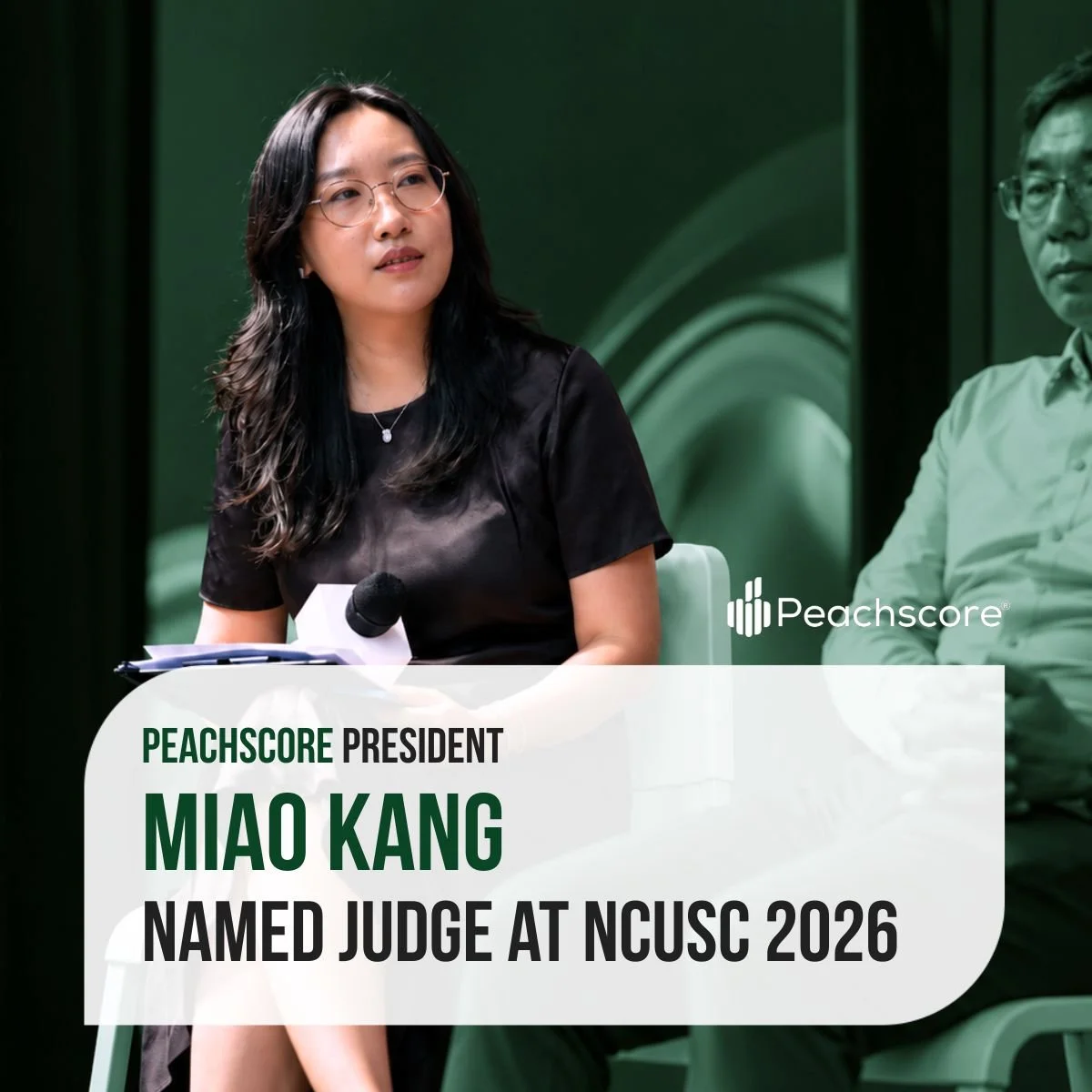
At the NYC Cross-border US Startup Competition (NCUSC) on October 10, 2026, founders pitched live to a panel of investors and operators.
This post uses that event to explain how Chinese founders build US investor relationships, and which local-market proof makes those relationships last.
What did NCUSC 2026 show about how US investors evaluate founders?
US investors at NCUSC 2026 judged founders in public: a live pitch, then investor Q&A, then panel discussion. That format rewards founders who can defend commercial claims under questioning, and the mixed panel suggests investors test technical depth and market execution together.
The New York program included live startup pitches and investor discussions, with judges from venture capital, founder, and engineering backgrounds, including experience at Google DeepMind, Meta, and AWS. A Peachscore LinkedIn post reports that Miao Kang, Peachscore China President and founder of Witti Marketing, served on the judging panel and evaluated the startups that pitched.
For cross-border founders, the takeaway is practical: claims about US demand get tested live, and the room doubles as a networking channel.
How do Chinese founders get warm introductions to US investors?
Founders get warm introductions by showing up where investors already gather and by giving connectors a reason to vouch for them. Competitions, accelerators, and portfolio-founder relationships work better than unsolicited decks. Survey data on venture sourcing shows that most deals travel through someone the fund already knows.
In a survey of nearly 900 venture capitalists by Gompers, Gornall, Kaplan, and Strebulaev, over 30% of deals came through professional networks, while about 10% arrived inbound from company management. Cold decks are the minority path.
Platforms now package those networks. Dealum reports more than 25,000 investors and 250 angel groups, and its 2025 partnership with Peachscore promised up to 4X investor exposure for participating startups. Peachscore CEO Alex Mojtahedi called the integration "a transformative step in how startups communicate with investors."
Three practical routes:
Enter competitions and demo days where investors judge live.
Join an accelerator with an investor network. Peachscore named Witti Marketing a growth partner on June 30, 2026.
Ask founders in a fund's portfolio for introductions, since they know what that fund backs.
Why does local-market traction decide investor confidence?
Investors treat US customer data as the clearest evidence that a foreign brand can win locally. A strong home-market record does not transfer automatically, because many US shoppers have never heard of the brand.
Reuters reported in 2025 that Chinese consumer brands including Urban Revivo, Luckin Coffee, and Mixue opened their first US stores, and that low brand awareness remains a hurdle. Morningstar analyst Ivan Su said Chinese brands are "positioning themselves as more affordable alternatives while building reliability."
Reliability has to appear in US data: repeat purchases, branded search growth, review volume, and press coverage.
How should Chinese brands build local-market growth in the US?
Chinese brands build US growth by creating trust signals first, then scaling paid reach. The four building blocks are reviews, AI search visibility, earned media, and full-funnel measurement.
Build review trust before scaling ads. BrightLocal's 2026 survey of 1,002 US adults found that 97% of consumers read reviews for local businesses, and 41% always do, up from 29% in 2025. According to coverage of the same survey, 80% are more likely to use a business that replies to all reviews.
Make the site readable to AI search. Adobe Analytics reported that AI traffic to US retail sites grew 393% year over year in Q1 2026. By May 2026, AI-referred traffic converted 54% better than non-AI traffic. These figures cover retail sites. Structured data and FAQ blocks help ChatGPT, Perplexity, and Google AI Overviews cite a brand.
Earn third-party coverage. Editorial mentions give investors and AI engines independent sources to cite.
Measure the whole funnel. Tie content, paid media, email, and conversion data together so pitch-deck claims match the dashboard.
What does a local-market growth system look like in practice?
Verafied, a New York handbag brand, started with a product story but no growth engine. Witti Marketing repositioned the brand for Western consumers and rebuilt the funnel. According to Witti's published case study, results over 12 months were:
6x revenue growth
200% higher Meta Ads click-through rate
55% higher brand search volume
32% higher abandoned-cart recovery
11 boutique and concept stores entered
Differentiation that Western consumers cannot see is a problem any newcomer to the US faces.
Frequently Asked Questions
Do US investors fund Chinese founders without a warm introduction?
Some do, but cold outreach is the smaller path. Surveyed venture capitalists report that most deals arrive through professional networks and referrals, and about 10% come inbound from management. Founders improve their odds by pairing outreach with public proof, such as US customer data and reviews.
Which events help Chinese founders meet US investors?
Events where investors judge or speak live work best: startup competitions such as NCUSC, accelerator demo days such as the Peachscore and Dealum program, and city tech weeks. Pick events with named investor judges and bring US traction data.
How long does it take to build US brand awareness from zero?
No reliable benchmark exists, because timelines vary by category and budget. Verafied's 12-month results, including 6x revenue and 55% higher brand search volume, show what a focused full-funnel program produced for one brand. Track branded search growth monthly as the leading indicator.
Do online reviews matter for a new brand in the US?
Yes. BrightLocal's 2026 survey found that 97% of US consumers read reviews for local businesses, and 31% only use businesses rated 4.5 stars or higher. A new brand with few reviews gives shoppers and AI assistants little to rely on, so review collection should start at launch.
How does GEO help a Chinese brand get recommended in the US?
Generative Engine Optimization (GEO) structures a brand's site and third-party mentions so AI assistants such as ChatGPT, Perplexity, and Google AI Overviews can find, understand, and cite it. Adobe reports that AI-referred retail traffic converted 54% better than other traffic in May 2026, so being cited carries commercial value.
Where should a Chinese founder start?
Start with two tracks in parallel: one warm path to US investors through an event or accelerator, and one set of local-market proof points that can be checked online. Witti Marketing works with founders on both the growth system and the GEO and SEO foundation. Book a free consultation or write to info@wittimarketing.com.
