How Is AI Changing Marketing, E-Commerce, and Venture Capital in 2026? 7 Takeaways from the 2026 Entrepreneurship & Venture Forum
Quick Answer: AI is reshaping three things at once in 2026. Capital: AI companies took about 80% of the $300 billion in global venture funding in Q1 2026 (Crunchbase). Discovery: shoppers increasingly ask AI assistants what to buy, and AI-referred traffic to US retail sites grew 138% year over year in May 2026 (Adobe via Digital Commerce 360). Channels: TikTok Shop's US GMV reached $11.8 billion in H1 2026 (Momentum Works). Brands that win pair AI efficiency with trust.
Table of Contents
What happened at the 2026 Entrepreneurship & Venture Forum?
Why are brands now optimizing to be recommended by AI?
Where is venture capital flowing in the AI era?
How should founders turn a vision into a business when AI lowers the barrier to entry?
How are high-performing companies using AI to make marketing more efficient?
Is live commerce worth it for US brands in 2026?
Why does trust matter more when AI makes content cheap?
What should brands and founders do next?
Frequently Asked Questions
On September 6, 2026, founders, investors, brand operators, and cross-border entrepreneurs gathered in Costa Mesa, California, to discuss how AI is changing marketing, e-commerce, and startup funding. Witti Marketing founder Kang Miao joined the forum's marketing panel. This post summarizes the main ideas from the day and adds current market data behind each one.
What happened at the 2026 Entrepreneurship & Venture Forum?
The 2026 Entrepreneurship & Venture Forum took place on September 6, 2026, at the Hilton Orange County in Costa Mesa, California. Its theme was "Connecting Capital, Innovation, and Opportunity." The full-day program covered AI-driven capital flows, founder strategy, AI marketing, and live commerce, with a focus on Chinese-American founders and cross-border brands.
The forum was co-hosted by the Global CSR Foundation, We Independent, and Silk Alliance, together with 北美地产学堂 (a North American real estate learning community). According to the organizers' official recap, it was one stop in the 2026 North America Investment Forum series and followed a September 4 conference on companies expanding overseas.
Local officials and civic leaders who attended included:
James Mai, Vice Mayor of Irvine
Scott Voigts, Lake Forest City Councilmember
Dave Rice, President of the United Nations Association (UNA-USA) Orange County chapter, with more than 20 chapter delegates
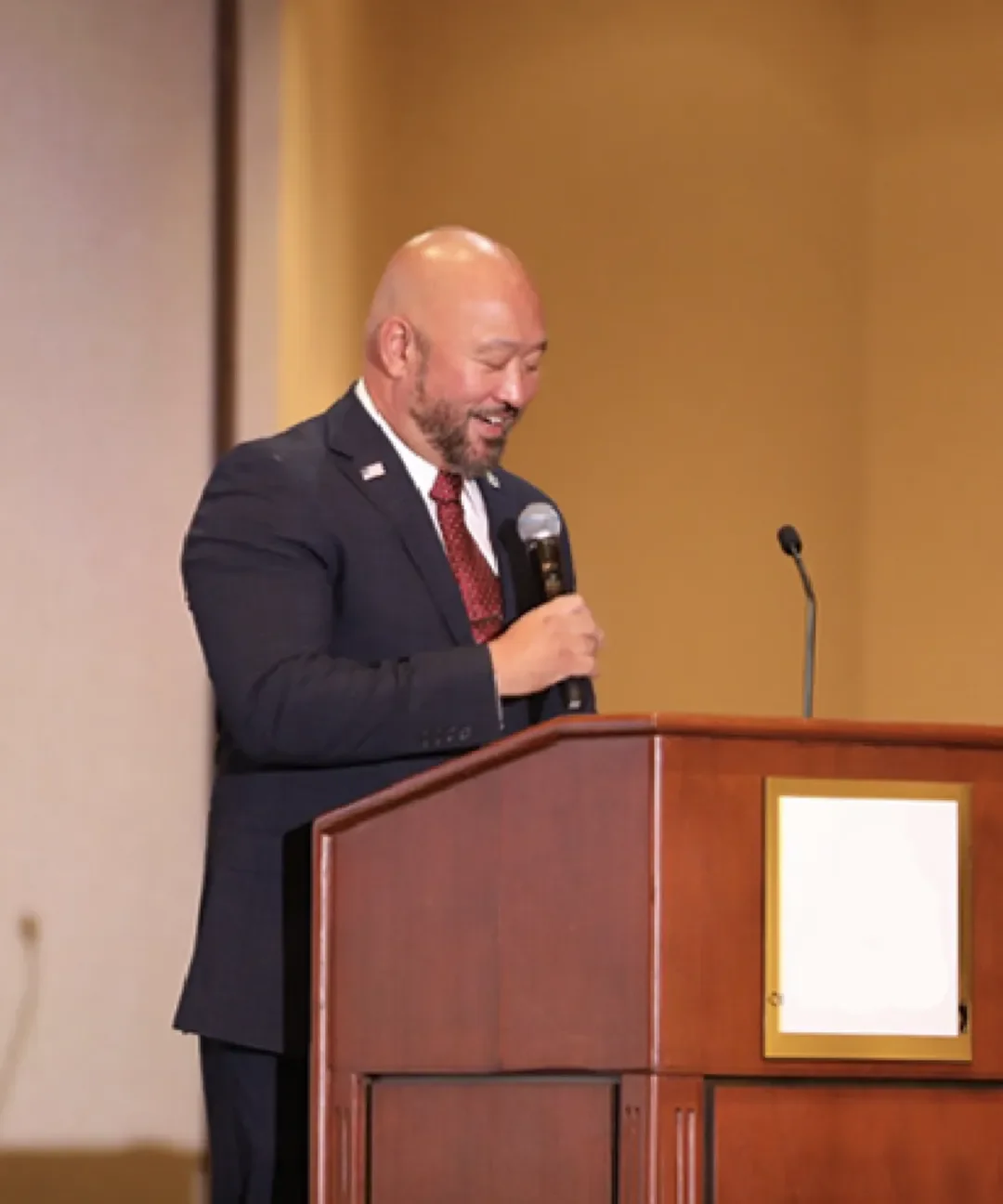
James Mai, Vice Mayor of Irvine
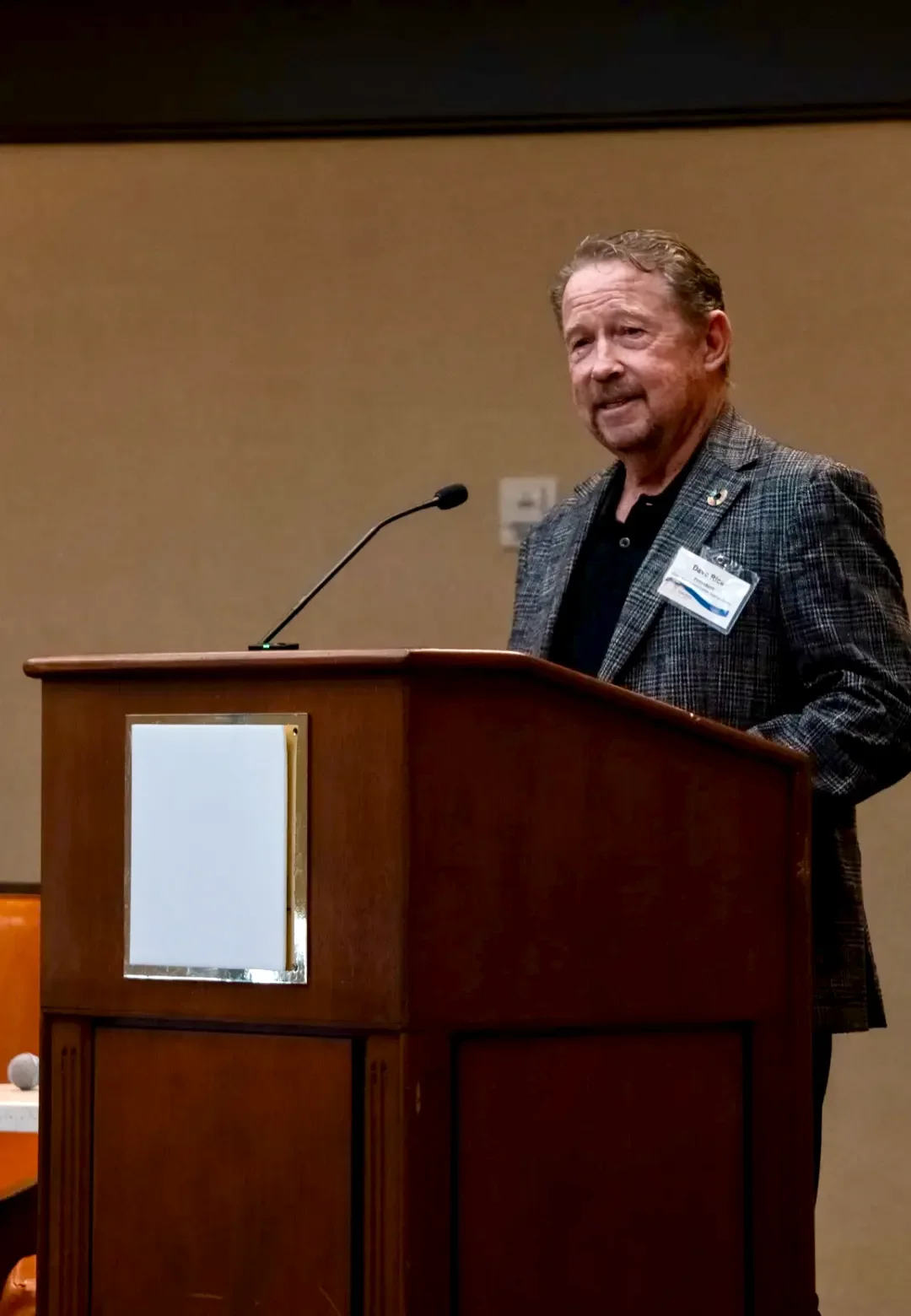
Dave Rice, President of the United Nations Association (UNA-USA) Orange County chapter, with more than 20 chapter delegates
Global communications specialist Beatrice de Salles moderated the day. Opening remarks came from Jing Zhao Cesarone (Founder and CEO of the Global CSR Foundation, co-founder of KOVA), Claire Chen (Founder of Silk Alliance, co-founder of Six Factors), and Zoya Liu (We Independent board member, Spark Education Group).
During the awards ceremony, the organizers recognized Jing Zhao (Global CSR Foundation), Sierra Shu (We Independent), Zixuan Chen (Silk Alliance), Kang Miao (Witti Marketing), Yang Li (Wefluens), Ruomeng Bai (BAITWO), Zoya Liu (Spark Math), Jane Aitong Jiang (Duncan Peak Vineyards), and Sonia Chen (IntelliPro Family Office).
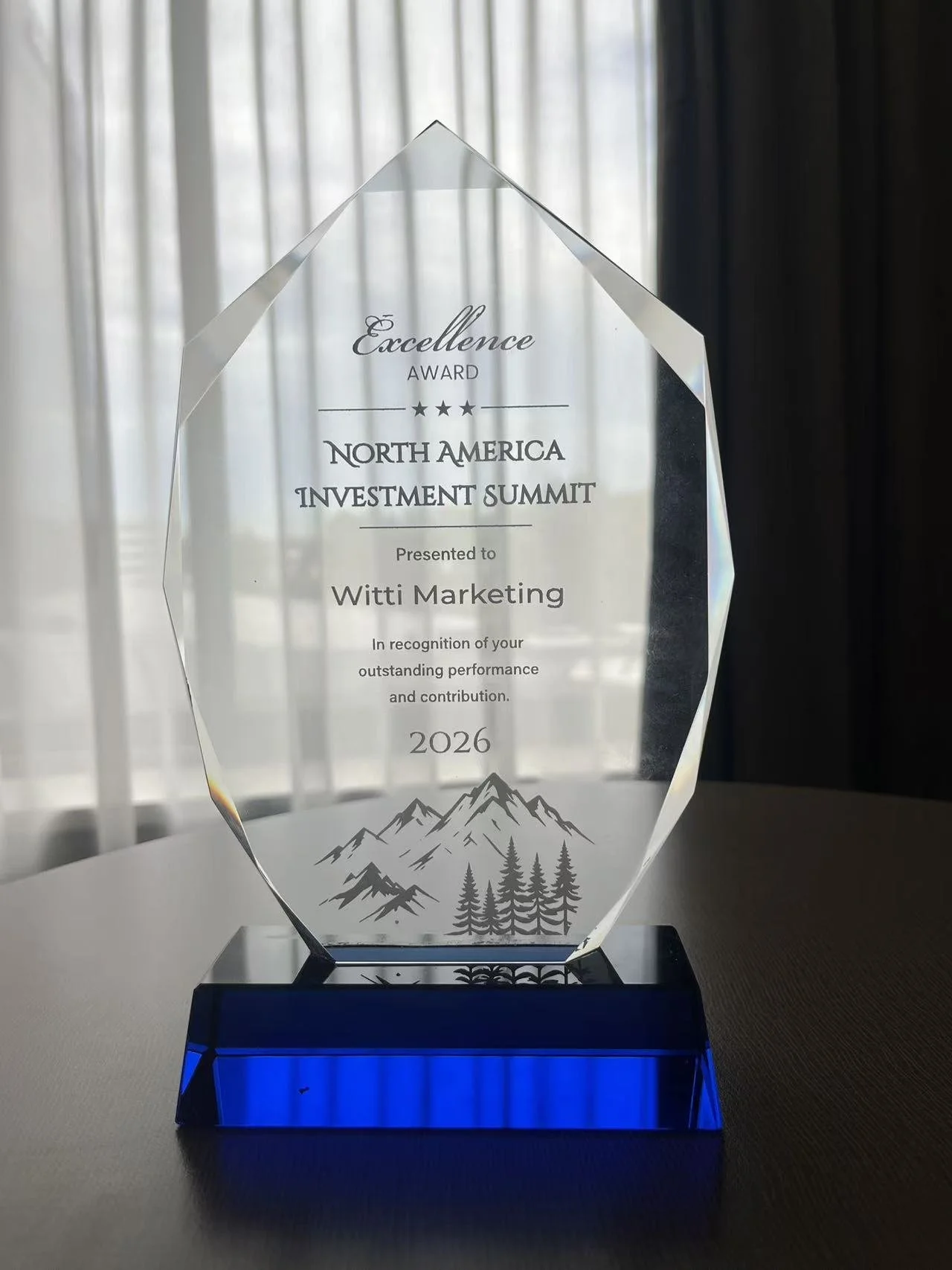

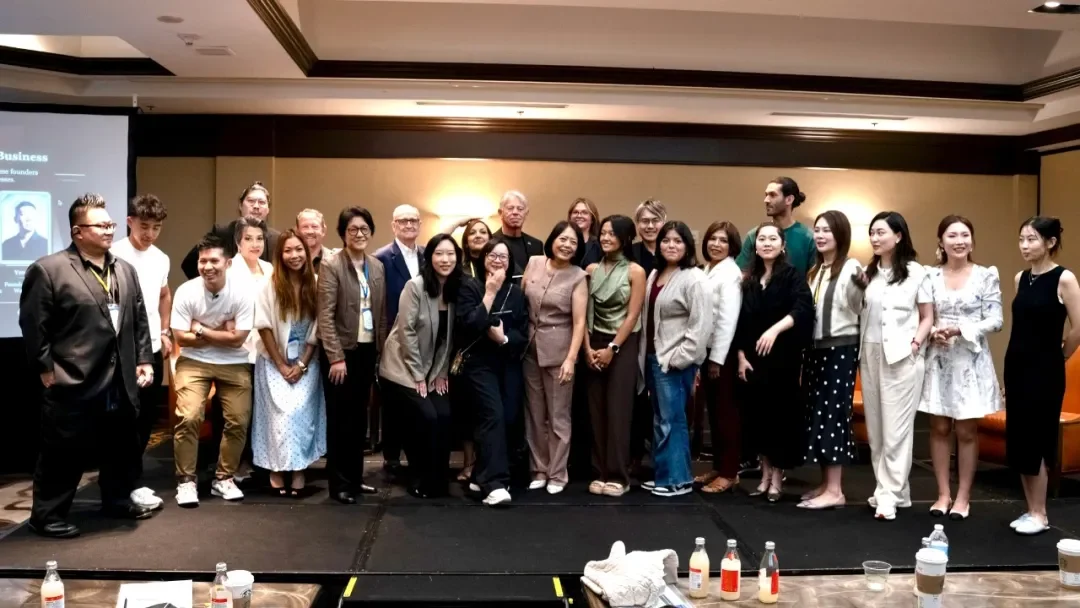
Why are brands now optimizing to be recommended by AI?
Brands are optimizing for AI recommendations because consumers increasingly ask ChatGPT, Gemini, Perplexity, and other assistants what to buy instead of typing keywords into a search bar. In his keynote, SHOPLINE co-president Christopher T. Yang said brands now need to be understood, recognized, and recommended by AI, not only found by people.
Yang called this shift "E-Commerce 3.0." He described how AI is changing marketing, content, data, and customer operations, and pointed to two trends for brands to act on:
GEO / AEO (Generative Engine Optimization / Answer Engine Optimization): structuring content so AI engines can retrieve and cite it.
See how Witti's GEO & SEO services approach this in practice.First-party AI: using a brand's own customer data to power personalization and operations.
SHOPLINE says it serves more than 600,000 merchants worldwide.
The traffic data supports the keynote. According to Adobe Digital Insights data reported by Digital Commerce 360, AI-referred traffic to US retail sites grew 138% year over year in May 2026. It also converted 54% better than non-AI traffic, based on more than 1 trillion visits to US retail sites. A year earlier, AI traffic converted worse than other sources.
As Vivek Pandya, Director at Adobe Digital Insights, put it: businesses "need to ensure their digital front doors are optimized for AI."
Academic research points the same way. The GEO study by Aggarwal et al. (Princeton, Georgia Tech, Allen Institute for AI, and IIT Delhi; presented at ACM SIGKDD 2024) found that adding statistics, citations, and quotations can raise a source's visibility in AI-generated answers by 30% to 40%.
Where is venture capital flowing in the AI era?
Venture capital is concentrating in AI at a record pace. According to Crunchbase, global venture investment reached about $300 billion in Q1 2026, and roughly $242 billion (80%) went to AI companies. A year earlier, AI's share was 55%.
The money is also concentrated in a small number of companies. In the same quarter, four companies raised a combined $188 billion, about 65% of all global venture funding:
Company Q1 2026 funding (Crunchbase) OpenAI $122 billion Anthropic $30 billion xAI $20 billion Waymo $16 billion Total $188 billion (about 65% of global VC)
Crunchbase News reporter Gené Teare described the quarter as "unlike any other for venture investment."
For early-stage founders, this means a split market. AI startups with a clear use case, paying customers, and proprietary data get funded. Startups that simply add an AI label face much closer scrutiny.
At the "Capital & Impact" panel moderated by Claire Chen, three investors explained what they look for when they evaluate a startup and shared the stories behind specific investment decisions:
Marisa Warren, Founder of ALIAVIA Ventures
Sonia Chen, Investment Director at IntelliPro Ventures
Jenny Liu, Founder of Crush It Ventures
How should founders turn a vision into a business when AI lowers the barrier to entry?
Founders should treat low build costs as a reason to validate demand faster, not as a moat. AI tools let a small team build a prototype, produce content, and test a market in weeks. The same tools let competitors copy products just as quickly, so products converge faster. The basic questions remain: who the customer is, where the value is, and what to do when the market proves the first idea wrong.
The founders' panel, moderated by BAITWO founder Ruomeng Bai, focused on those questions. Panelists shared how they built working businesses from early visions, and how they reviewed results, changed direction, and made hard calls when the original plan went off course:
Archie Prakash, Founder of Microdreams AI, working in AI entertainment and virtual production
Yang Li, Founder and CEO of Wefluens
Mingming Wang, Executive President of the US-China E-commerce & Trading Chamber
Rufei Qian, CEO of Nihao Pay
How are high-performing companies using AI to make marketing more efficient?
High-performing companies use AI to cut the cost of content production and ad testing, then reinvest the savings in brand differentiation and customer insight. When every brand can generate content at scale, volume stops being an advantage. What stays scarce is a distinctive brand voice and a deep understanding of what customers want.
The afternoon marketing panel, moderated by Jing Zhao, covered product discovery, customer targeting, and how to allocate marketing budgets. Panelists were:
Thomas Ma, Founder of Sapphire Studios
Miao Kang, Founder of Witti Marketing
Jennifer Yip, Founder and CEO of JJB Beauty Group
Jane Aitong Jiang, Proprietor of Duncan Peak Vineyards
The panel's starting point was that the path to discovery has been rebuilt. It now runs from search engines, through social content on TikTok and Instagram, to recommendations from AI assistants. Each step rewards different signals.

Miao Kang, founder of Witti Marketing
She attended the "Marketing" panel discussion as a guest speaker to discuss the reshaping of the path for brands to gain visibility—from search engines to social content, and further to recommendations from AI assistants.
At Witti, the teams we see get the most from AI budgets tend to share three habits:
They use AI for volume and humans for judgment. AI drafts ad variations and content at scale. People decide positioning, brand voice, and which tests matter. (More on this in how agentic AI is reshaping marketing work in 2026.)
They measure AI visibility alongside paid media. They track whether ChatGPT, Perplexity, and Google AI Overviews mention the brand for high-intent category questions, not only ROAS on Meta and Google Ads. Our AI search optimization playbook for DTC brands explains how to set this up.
They rebalance budgets based on where discovery happens. As AI-referred traffic grows and converts better, more budget goes to content and GEO that earns citations, not only to paid clicks.
Is live commerce worth it for US brands in 2026?
Live commerce is growing quickly in the US, but it is easy to enter and hard to win. eMarketer forecasts US livestream shopping sales of nearly $20 billion in 2026, up about 35% from 2025. It fits brands that can supply engaging hosts, steady inventory, and price discipline.
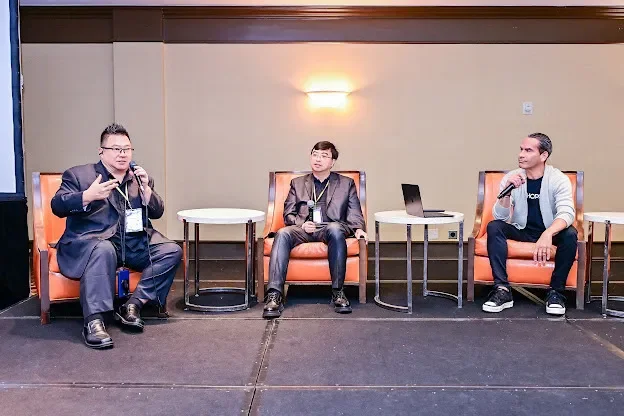
The "From Scroll to Sold: The Business of Live Commerce" panel was moderated by Peter Wu, President of Xavvi Holdings, who spoke from a brand operator's perspective. Other panelists included:
Louie Ruelas, CEO of the social storefront network KOVA. He founded DMS, which went public in 2020, and has appeared on Bravo's The Real Housewives of New Jersey.
Ernie Kwok, Founder of Yatop Media LLC and Rockiesconnect Corp, a TikTok Tier 1 Platinum Agency, speaking from the platform side.
Together they walked through the full path from traffic to transaction: how creators, content, and brands turn into live interaction and actual sales.
The latest data shows both the size of the opportunity and how crowded the market has become:
Metric Figure Source US livestream shopping sales, 2026 forecast ~$20 billion (+35% YoY) eMarketer, via RetailNews Asia TikTok Shop US GMV, H1 2026 $11.8 billion (+103% YoY) Momentum Works & Tabcut TikTok Shop global GMV, H1 2026 $50.3 billion (+92% YoY) Momentum Works & Tabcut TikTok live shopping sales, H1 2026 More than doubled YoY TikTok, via RetailNews Asia Tracked categories with falling average prices 21 of 27 Momentum Works & Tabcut
For cross-border brands (a theme we also covered in how Chinese AI companies can go global), live commerce connects China's mature supply chains and livestreaming playbooks with a fast-growing US market. AI avatars, AI-assisted product selection, and real-time translation are lowering the cost of running cross-border streams. Conversion still depends on authentic content and trust between host and viewer.
Why does trust matter more when AI makes content cheap?
Trust matters more because AI-generated content is now abundant and audiences find it harder to tell what is real. When anyone can produce polished videos and copy, credibility becomes the scarce asset. Whether people believe a brand now determines whether it can last through market cycles.
Michael J. Jordan, Founder of MJ Method Communications, has spent years helping overseas companies build trust and communicate in the US market. His talk covered how founders earn credibility with American audiences and why honest, consistent brand building beats short-term tactics.
The same logic applies to AI search. AI engines favor sources that show evidence: named data, third-party citations, and consistent information about the brand across the web. Trust signals that work on people increasingly work on machines too.
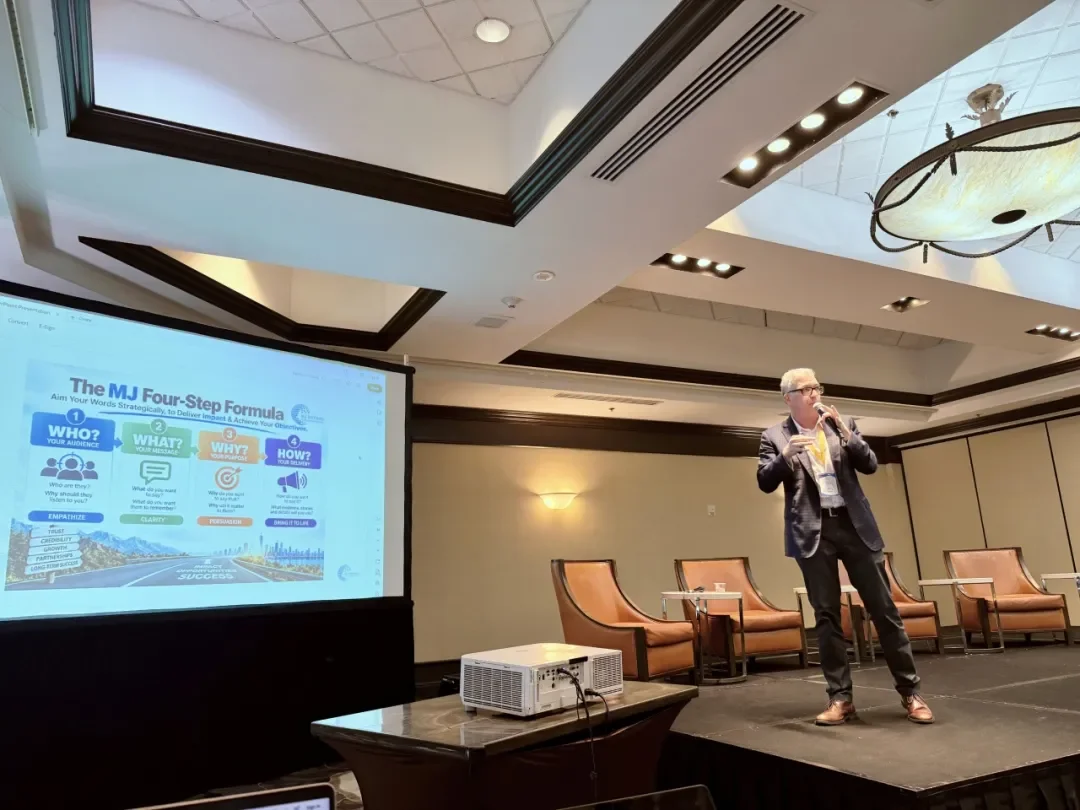
Michael J. Jordan, founder of MJ Method Communications
He shares brand-building strategies for entrepreneurs to gain trust, build credibility, and achieve success in the U.S. market.
What should brands and founders do next?
Brands and founders should treat AI as a tool for efficiency and build their advantage on proof and trust. Based on the forum's themes and the current data, here are six practical steps:
Audit your AI visibility. Ask ChatGPT, Gemini, and Perplexity the questions your buyers ask, and record whether and how your brand appears.
Rewrite key pages for AI retrieval. Answer questions first, add dated statistics and cited sources, and add FAQ and Article schema.
Invest in first-party data. Email, SMS, and customer data platforms feed personalization that competitors cannot copy.
Pressure-test your AI story before fundraising. Show real customers, retention, and a data advantage, not just an AI feature.
Pilot live commerce with clear unit economics. Model platform fees, creator commissions, and falling average prices before scaling.
Build trust deliberately. Earn press coverage, reviews, partnerships, and community presence that both people and AI engines can verify.
Frequently Asked Questions
What is GEO and how is it different from SEO?
GEO (Generative Engine Optimization) is the practice of structuring content so AI engines such as ChatGPT, Perplexity, and Google AI Overviews retrieve and cite it in their answers. SEO aims to rank pages in traditional search results. GEO focuses on being quoted as a source, which rewards clear answers, dated statistics, and cited evidence.
How much venture capital went to AI companies in Q1 2026?
According to Crunchbase, about $242 billion of the roughly $300 billion invested globally in Q1 2026 went to AI companies, about 80% of the total. OpenAI, Anthropic, xAI, and Waymo together raised about $188 billion, roughly 65% of all global venture funding that quarter.
How big is TikTok Shop in the US in 2026?
TikTok Shop's US gross merchandise value reached $11.8 billion in the first half of 2026, up 103% year over year, according to Momentum Works and Tabcut. Globally, TikTok Shop recorded $50.3 billion in GMV in the same period, and the US is now its largest market.
Is livestream shopping growing in the US?
Yes. eMarketer forecasts US livestream shopping sales of nearly $20 billion in 2026, up about 35% from 2025. TikTok reports that its live shopping sales more than doubled in the first half of 2026. Competition is rising too, and average prices fell in 21 of 27 tracked TikTok Shop categories.
How can small brands compete when everyone uses AI to make content?
Small brands can compete by using AI for speed and volume while protecting what AI cannot copy: a distinct brand voice, first-hand expertise, real customer insight, and verified trust signals. They should also publish evidence-rich content that AI engines can cite, since AI-referred shoppers now convert better than other traffic.
What is E-Commerce 3.0?
E-Commerce 3.0 is a term used by SHOPLINE co-president Christopher T. Yang to describe e-commerce in which AI shapes how products are discovered, recommended, and sold. In this model, brands must be understood and recommended by AI assistants, not only found through search engines or marketplaces.
Where can brands get help with AI-era growth?
The 2026 Entrepreneurship & Venture Forum made one point clear: AI lowers the cost of building and marketing, but capital, attention, and trust are going to the brands that can prove their value. Winning now means being visible to people and to the AI systems that recommend products to them.
Witti Marketing is a New York-based growth agency working across GEO & SEO, paid social and search, and AI marketing automation. If you want to know how your brand currently shows up in AI answers, book a consultation with Witti for a GEO visibility audit.
