How Can Chinese AI Companies Go Global? (Plug and Play's 38th GTN)
Quick Answer: In the AI era, Chinese companies go global by being built for global markets from day one, not by translating a finished product. Speakers at the 38th Global Tech Network (GTN) in Shanghai, co-hosted by Plug and Play China and Peachscore on August 7, 2026, agreed on three moves: pick the first overseas market with data, set a clear anchor for narrative, business model, legal and talent, and localize go-to-market for how buyers now search.
Table of Contents
How is the AI wave of going global different from earlier waves?
Why is 2026 the moment for Chinese AI companies to go global?
What did founders and investors agree on at the 38th GTN?
How should a Chinese AI startup pick its first overseas market?
How do you build an overseas go-to-market that AI search engines can find?
What legal, compliance and talent issues come first?
Which startups stood out at the 38th GTN?
Frequently Asked Questions
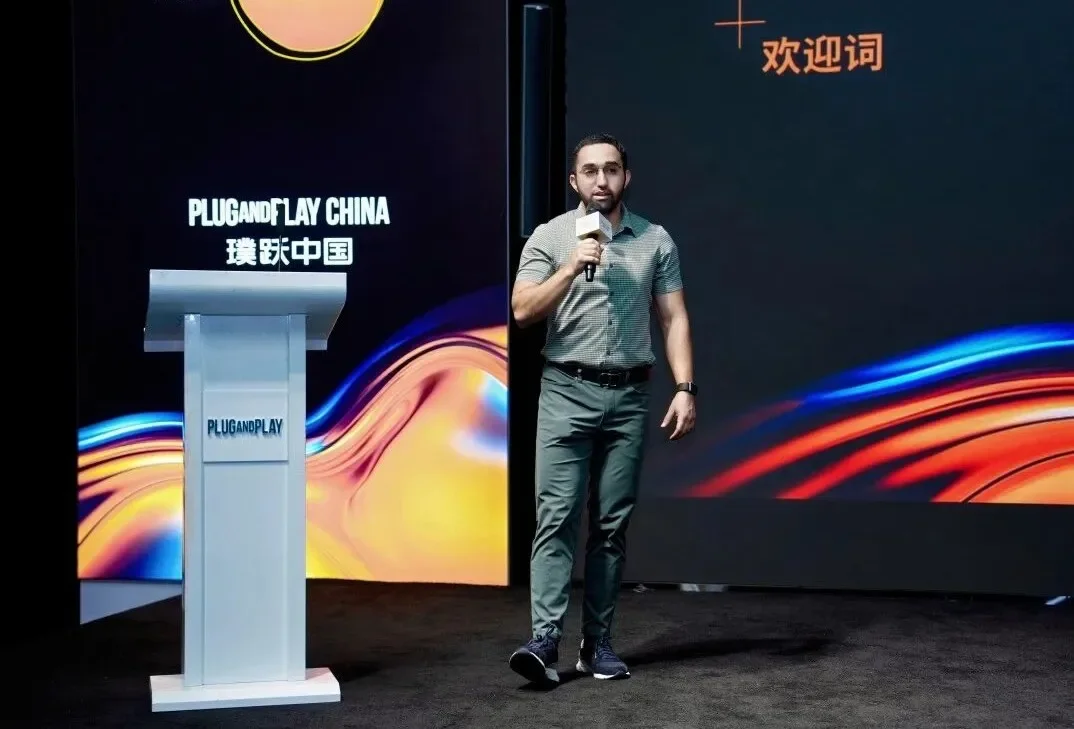
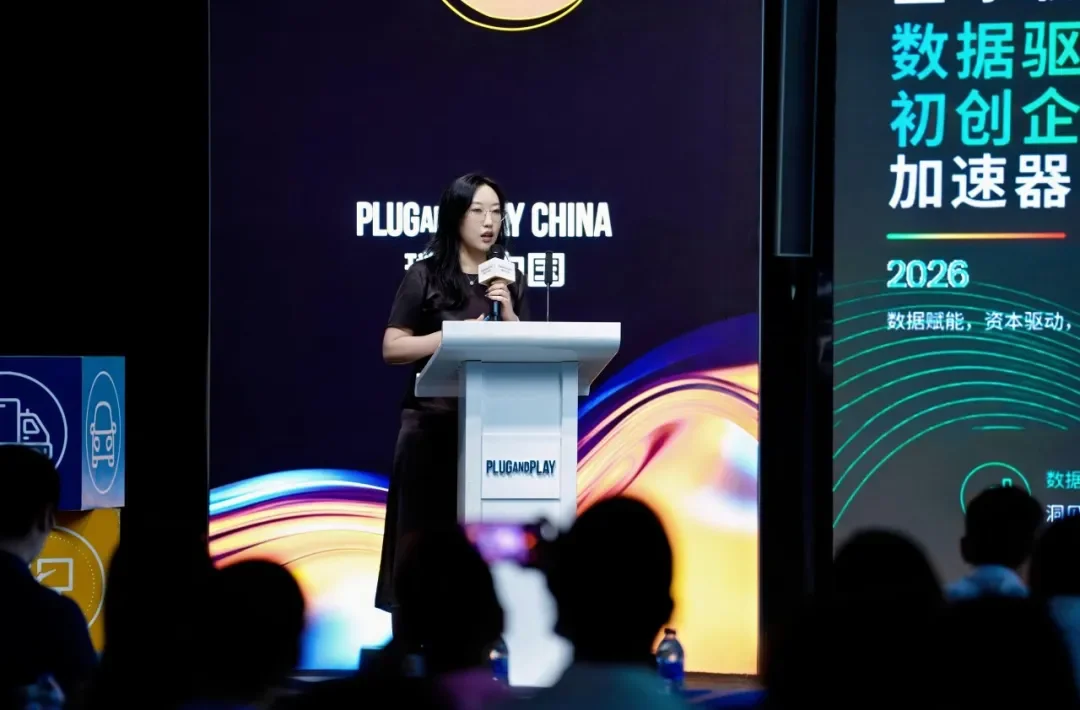
For Chinese AI founders, the question has shifted from "should we go overseas?" to "how do we survive as a global company?" That shift was the theme of the 38th Global Tech Network (GTN), held on August 7, 2026 in Zhangjiang, Shanghai. Plug and Play China co-presented the event with Peachscore, a data-driven startup accelerator making its first appearance in China. Miao Kang, President of Peachscore China and founder and CEO of Witti Marketing, gave the keynote and moderated the main panel.
How is the AI wave of going global different from earlier waves?
Chinese companies have gone global in three waves. The first exported manufactured goods, and the second built consumer brands abroad. The current AI-era wave exports products and operating capabilities, and its startups design product, brand, legal structure and team for global markets from the first day.
The GTN panel traced this path from trade, to brands, to AI. Their point: going global in the AI era is not about translating a product into English and selling it abroad.
Wave What goes overseas Typical model Main advantage Wave 1: Export trade Manufactured goods OEM, export trade, cross-border marketplaces Cost and supply chain Wave 2: Consumer brands Consumer brands DTC sites, Amazon, TikTok Shop Product speed and brand building Wave 3: AI-native companies AI products and operating capabilities Born-global startups, SaaS, AI apps Engineering talent, model quality, iteration speed
Academic research uses similar language. A September 2026 report from Cheung Kong Graduate School of Business (CKGSB) and IE University calls the current phase "capability export." As CKGSB Associate Dean Li Wei put it, "companies are increasingly taking the operating capabilities abroad." The report also names two models: "chain-style" expansion, where large firms bring their suppliers along, and "swarm-style" expansion, where smaller firms move fast on China's shared logistics and platform infrastructure.
Why is 2026 the moment for Chinese AI companies to go global?
Chinese AI models now perform close to US models while costing far less to build, and AI apps are finding paying users abroad. That combination gives Chinese AI startups a real product advantage in overseas markets for the first time, rather than only a price advantage.
The numbers behind this:
The model gap is nearly closed. The Stanford AI Index 2026 found the gap between the top US and Chinese models was 2.7% in March 2026, down from 17.5 to 31.6 percentage points in May 2023.
It was done with far less capital. The same report counts $285.9 billion in US private AI investment in 2025, against $12.4 billion in China, a ratio of about 23 to 1.
Chinese products lead in some categories. In the a16z Top 100 Gen AI Consumer Apps, 6th Edition (March 2026), a16z partner Olivia Moore described Chinese-developed models "consistently leading in output quality across video generation," naming Kling AI, Hailuo and Pixverse.
Overseas revenue is real. According to 36Kr, Kunlun Tech reported Q1 2026 revenue of 2.57 billion yuan, with 97% from overseas business, across more than 100 countries.
Usage is scaling fast at home. Daily token calls in China grew from tens of billions in early 2024 to 140 trillion in March 2026, per the same 36Kr analysis.
What did founders and investors agree on at the 38th GTN?
The panel agreed that globalization is no longer optional for AI founders, and that it has to be designed in from day one. A company needs a clear anchor at each step, including product positioning, market understanding, legal compliance and team structure, before it can grow steadily in a foreign market.
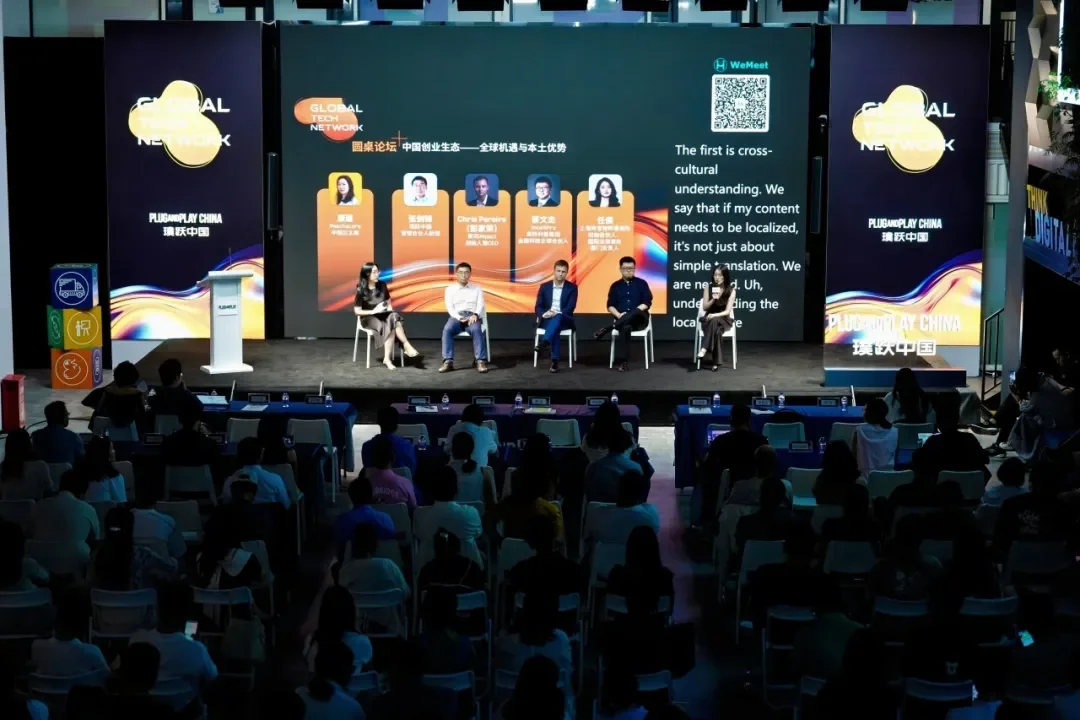
Miao Kang moderated the roundtable, titled "China's Startup Ecosystem: Global Opportunities and Local Advantages." Panelists were:
Zhang Jianfeng, Special Assistant to the Managing Partner, Plug and Play China
Chris Pereira, Founder and CEO, iMpact
Cai Wenjie, Global Partner, IntelliPro Fintech
Ren Yu, Partner and Head of International Legal Affairs, Shanghai Juanyi Law Firm
Four themes came out of the discussion:
Global mindset and structure from day one. Founders should not wait for domestic success before thinking about overseas users, entities or hiring.
Tell your own story in a cross-cultural setting. How a Chinese AI company explains itself to US or European buyers affects trust as much as the product does.
Choose the business model and track first, then execute. The panel stressed focus: pick a segment where the product wins, and commit.
Solve a problem, not "go overseas" for its own sake. China and overseas markets each have strengths and weaknesses. Value created for users should drive the decision.
How should a Chinese AI startup pick its first overseas market?
Start from data, not from assumptions about which market is "biggest." Founders should compare where their product already has signal, where funding and partners are available, and where they can support customers. For many AI startups, that analysis points to the US, but it has to be earned market by market.
This was the focus of Miao Kang's keynote, "From China to Silicon Valley: Global Opportunities for the Next Generation of AI Founders." She described how Peachscore, founded in 2017 and backed by Plug and Play's founders, uses AI and data to support Chinese companies and founders across the full journey: market entry, fundraising, community, and mentorship. Her argument was that this kind of ongoing support helps founders connect with overseas industry opportunities with more precision than cold outreach.
A practical market-selection checklist, based on the themes raised at GTN:
Existing demand signal: Where are sign-ups, downloads or inbound leads already coming from?
Capital access: Which market's investors understand your category? Peachscore's model connects founders to data-matched investors.
Regulatory load: Data, AI and privacy rules vary widely between the US, the EU and Southeast Asia.
Distribution: Can you reach buyers through channels you can afford and measure?
Support coverage: Can your team serve customers in their time zone and language?
How do you build an overseas go-to-market that AI search engines can find?
A Chinese AI company entering the US needs positioning in the buyer's language, paid acquisition it can measure, and content that AI answer engines can cite. Buyers now ask ChatGPT, Perplexity and Google AI Overviews for recommendations, so a brand that is missing from those answers is missing from the shortlist.
The search shift is well documented. Gartner predicted that traditional search engine volume would drop 25% by 2026 as users move to AI assistants. As Gartner VP Analyst Alan Antin said, "GenAI solutions are becoming substitute answer engines."
For Chinese AI founders, that changes the GTM plan in three ways:
Positioning comes first. Name the category and the problem in the terms US buyers use. A literal translation of Chinese product copy rarely matches how buyers search. Market and user research shows which terms those are.
Paid media buys learning, not only traffic. Early Meta, Google and LinkedIn campaigns show which message and audience converts before a larger budget goes in.
Generative Engine Optimization (GEO) builds lasting visibility. Research from Princeton and partners (Aggarwal et al., ACM SIGKDD 2024) found that adding statistics, citations and expert quotations can raise visibility in AI-generated answers by up to 30 to 40%.
This is the work Witti Marketing, the New York growth agency Miao Kang founded and an official growth partner of Peachscore, does with brands entering the US: GTM strategy, paid ads, GEO and SEO. The lesson for founders is that localization covers more than language. It also means being present where overseas buyers look for answers.
What legal, compliance and talent issues come first?
Legal structure, data compliance and the first overseas hires should be decided before launch, not after the first customer. These choices shape what a Chinese AI startup can sell, where it can store data, and whether US enterprise buyers and investors will trust it.
The GTN panel included a cross-border lawyer and a talent and fintech partner for this reason. The issues founders raised most often:
Entity and structure: Where to incorporate, and how that affects fundraising and customer contracts.
Data and AI regulation: Rules for data transfer, privacy and AI disclosure differ across the US, the EU and other markets.
Talent: Deciding which roles must be local (sales, customer success, legal) and which can stay in China (engineering, product).
Trust signals: Security reviews, certifications and local references that enterprise buyers ask for.
The CKGSB and IE University report makes a similar case. CKGSB Dean Li Haitao said the next winners must "understand local politics, respect local rules, invest in local capabilities." The report also lists local-content requirements, fragmented demand and cultural differences as the main barriers, and warns that overseas markets cannot be treated as extensions of China.
Which startups stood out at the 38th GTN?
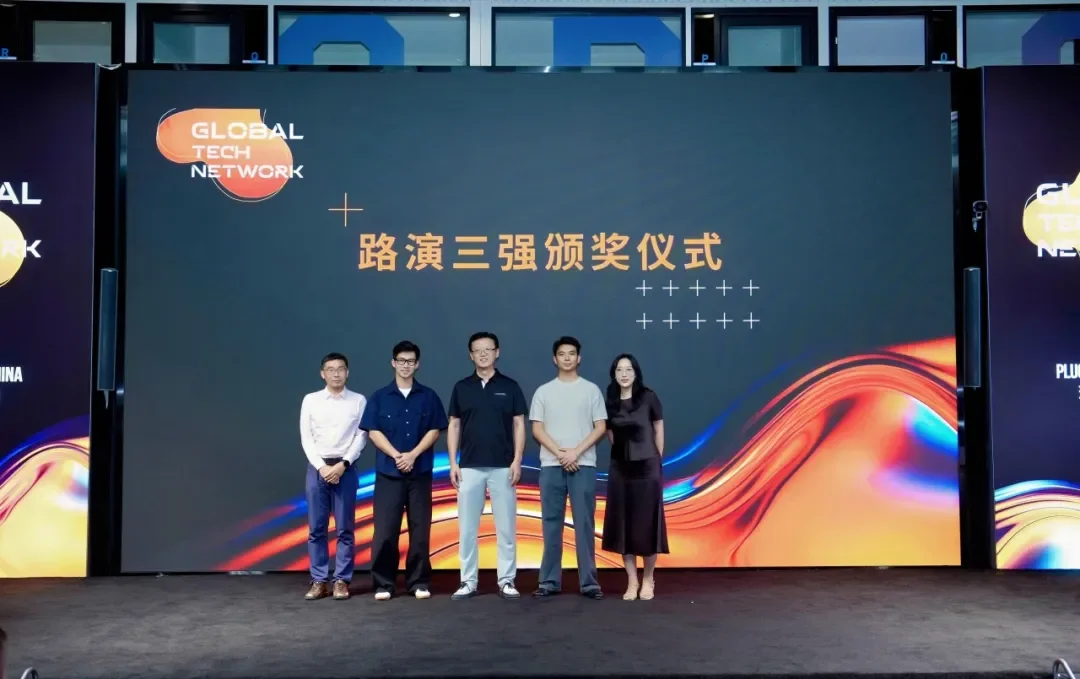
Eleven companies pitched at the 38th GTN, across smart hardware, smart agriculture, fashion supply chains, enterprise services, biosensing, AI education, digital marketing, green tech and interior design. Judges from JPMorgan, Baidu Cloud and Overture Management picked three winners.
Top three:
Modiva Studio, presented by founder Zhao Binxiang
WeMeet (荟神), presented by founder and CEO Gu Xuebin
Zhiban Intelligence (植伴智能), presented by co-founder Zhang Huajie
The other pitching companies were Wuyi Zhizao (物艺智造), CREABRA, Walala.ai, Demeter Robotics, Guangyu Zhilian (光屿智联), VYXA, SweatLab BioWearable and Primentoring AI.
The event also included a briefing by Wang Yudong, exhibition manager of the China International Import Expo (CIIE), on the 9th CIIE Innovation Incubation Zone. It focuses on biomedicine, AI, green technology and advanced manufacturing.
About GTN: Global Tech Network is a monthly startup community event launched by Plug and Play China. It has run more than 30 editions, with 500+ registrations and 150 to 200 in-person attendees per event, and 10,000+ livestream viewers across five platforms. GTN now also runs in Beijing, Shenzhen, Hefei, Changzhou and Nantong. Plug and Play operates 60+ innovation centers worldwide, has invested in more than 2,000 tech companies, and works with 550+ corporate partners.
Frequently Asked Questions
What does "born global" mean for a Chinese AI startup?
A born-global startup is designed for international customers from day one, rather than expanding abroad after success at home. For Chinese AI founders, that means planning the overseas entity, English-language positioning, data compliance and first international hires before launch, as speakers at the 38th GTN recommended.
How is the AI wave of Chinese companies going global different from earlier waves?
The earlier brand wave was led by consumer companies selling through Amazon, DTC sites and TikTok Shop. The AI wave is led by tech startups that export products, models and operating capabilities. These companies design product, legal structure, team and brand for global users from day one, rather than adapting a domestic product later.
Why are Chinese AI startups expanding to the US in 2026?
Chinese models now perform close to US models. The Stanford AI Index 2026 measured a 2.7% gap in March 2026. Chinese AI apps also lead in categories like video generation, and some companies already earn most of their revenue abroad. The US offers the largest paying market for AI software.
What is the biggest mistake Chinese AI companies make when going global?
The most common mistake is treating an overseas market as an extension of China: translating the product, copying the domestic playbook, and ignoring local legal, cultural and buyer differences. Speakers at the 38th GTN stressed setting a clear anchor for narrative, business model, compliance and talent before scaling.
How do Chinese AI startups get discovered by overseas buyers?
They combine clear positioning in the buyer's language, measurable paid media, and content built for AI search. Because buyers increasingly ask ChatGPT, Perplexity and Google AI Overviews for recommendations, Generative Engine Optimization (GEO) helps a new brand appear in AI-generated answers alongside established competitors.
What is Peachscore?
Peachscore is a data-driven startup accelerator platform founded in 2017, with Plug and Play's founders as major shareholders. It uses AI and data to connect founders with investors, mentors and market opportunities. Peachscore made its first China appearance at the 38th GTN in Shanghai on August 7, 2026. Miao Kang leads Peachscore China.
Planning your US go-to-market?
Witti Marketing helps Chinese AI and consumer brands enter the US with GTM strategy, paid ads, GEO and SEO. If you are working through positioning, first-market selection or AI search visibility, talk to the Witti team.
